
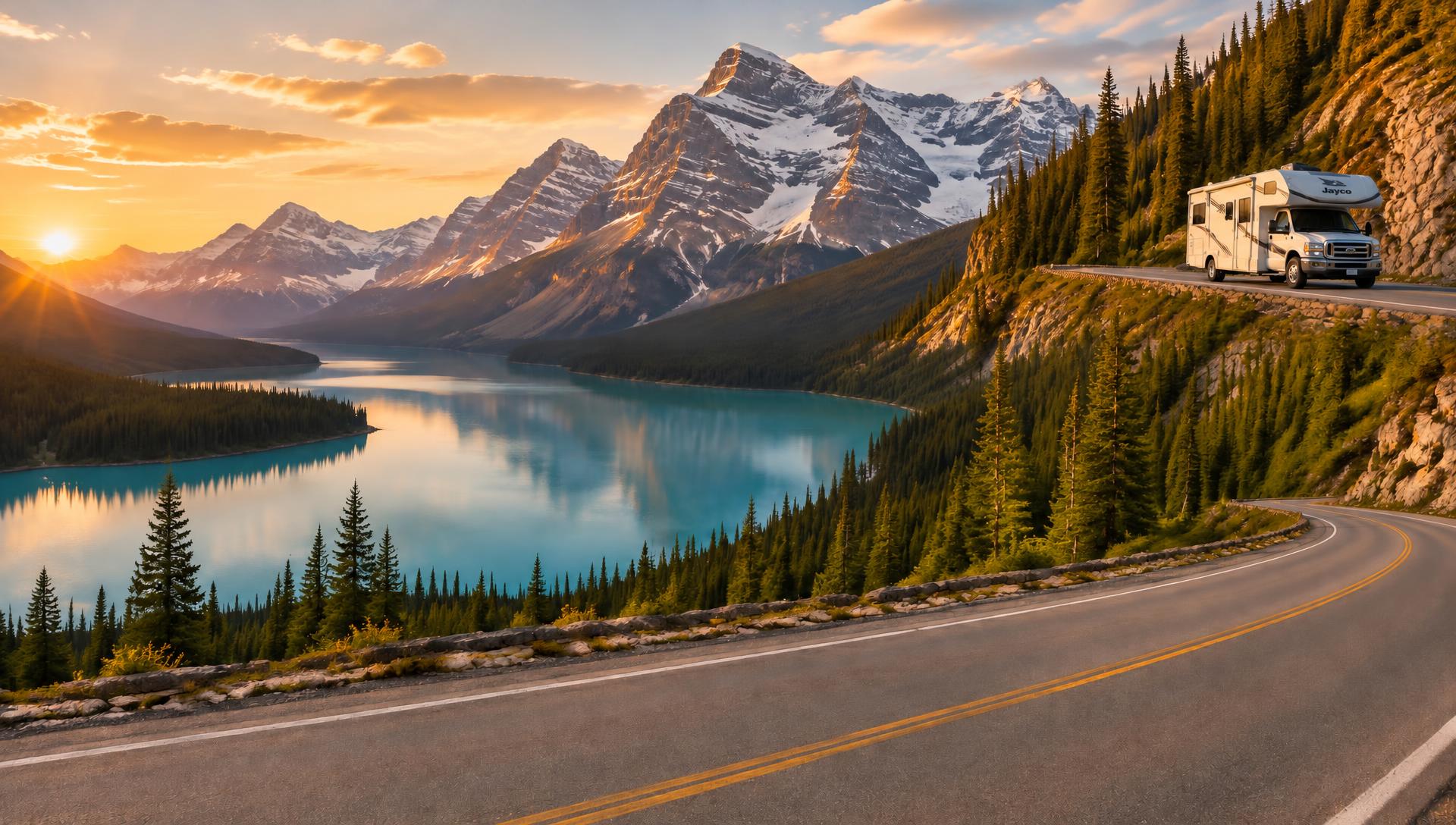
A North American motorhome is basically a small apartment on a truck. It has its own water, power, gas and toilet systems. Learn these five systems and you'll look like a pro by day two.
The 3-way fridge
Most rental RV fridges are 3-way absorption fridges. "3-way" means they can run on three power sources:
- Propane (LP gas) — use this when camped without power. Very efficient. A tank lasts days.
- 120V shore power (AC) — use when plugged into a campsite hook-up. Saves your propane.
- 12V battery (DC) — only while the engine is running. It drains the house battery fast if parked.
Many fridges have an "Auto" setting that picks the best source. Absorption fridges cool slowly — switch it on a few hours before loading food, keep it level (they hate slopes) and don't open the door every five minutes.
⚠ Heads up
Turn propane appliances off when refuelling at a gas station. Open flame + fuel fumes = bad day. Many rental companies also ask you to switch off on ferries.
Propane: cooking, heating and hot water
Your stove, oven, furnace, water heater and (often) fridge all run on propane from an on-board tank. A typical tank lasts 1–2 weeks in summer — much less in cold weather when the furnace runs.
Ran out of gas for cooking?
- Check the gauge on the control panel daily. Refill at ¼, not empty.
- Refill at propane stations: many Co-op, Petro-Canada, U-Haul, Canadian Tire and campgrounds. Staff fill it for you — it's sold by the litre.
- Most rentals must be returned with the propane tank full or you pay a refill fee (often higher than pump price).
- Emergency? Plug into shore power and use a microwave or electric kettle, or cook on the campground fire pit.
Hook-ups: why you want them
Canadian campgrounds are big, roomy and usually well equipped. Sites are sold as:
| Site type | What you get | Typical price |
|---|---|---|
| Unserviced / dry | Just a pad. Use your own tanks and battery. | C$25–40 |
| Power only | Electric post (15/30/50 amp) | C$35–55 |
| Partial (power + water) | Electric + fresh water tap | C$40–65 |
| Full hook-up | Power, water and sewer | C$50–90+ |
Power hook-up is what runs the microwave, air con, electric heaters and the 120V wall sockets. Without it, you only have the house battery (12V lights, water pump, furnace fan) — and it runs flat in a day or two.
🍁 Top tip
Book power for at least every second or third night. It recharges the house battery, saves propane, and lets you charge everything.
Charging phones, laptops & cameras
- USB sockets (on many newer RVs) run off the 12V house battery — fine for phones anywhere.
- 120V wall sockets (North American Type A/B plugs) only work on shore power or the generator. Bring adapters — and check your laptop charger says 100–240V (most do).
- Cab 12V socket works while driving. A cheap 12V USB car charger is gold.
- Charge camera batteries while driving or on hook-up nights. A power bank covers the gaps.
Why you might need a generator
Many larger motorhomes have an on-board gas generator. It gives you 120V power when there's no hook-up — for the microwave, air con, a hair dryer or recharging the house battery. It runs off the main fuel tank (it'll stop at about ¼ to keep you from stranding yourself) and is charged by the hour of use (often C$3–5/hr). Campgrounds have quiet hours (usually 10pm–7am) and many national park campgrounds restrict generator use — check the rules.
Water & waste tanks
- Fresh tank — fill with a drinking-water hose (never the grey one!).
- Grey tank — sink and shower water.
- Black tank — toilet. Use RV toilet paper and the chemical provided.
Empty at a dump station (sani-dump): black first, then grey to rinse the hose. Gloves on. Most rentals must be returned with tanks empty or you'll pay a dump fee.
Breakdowns
- Get safely off the road, hazards on, triangles out if supplied.
- Call your rental company's 24/7 roadside number (it's on the key tag/paperwork) before calling a tow truck — unauthorized repairs may not be refunded.
- Take photos and keep every receipt.
- No phone signal? Note your highway km marker. Truckers and locals are very helpful.
Mobile coverage disappears in the mountains and the north. Download offline maps before you leave town.
Driving a big rig
- Know your height (usually 3.3–3.7m / 11–12ft). Watch drive-thrus and gas station canopies.
- Swing wide on turns — the back overhang swings out.
- Use a spotter when reversing. Always.
- Drive on the right. Speeds and distances are in km/h and km.
- Mountain descents: drop a gear and let the engine brake — don't ride the brakes.
Winter? Read our winter RV guide. Worried about bears? Wildlife safety.