
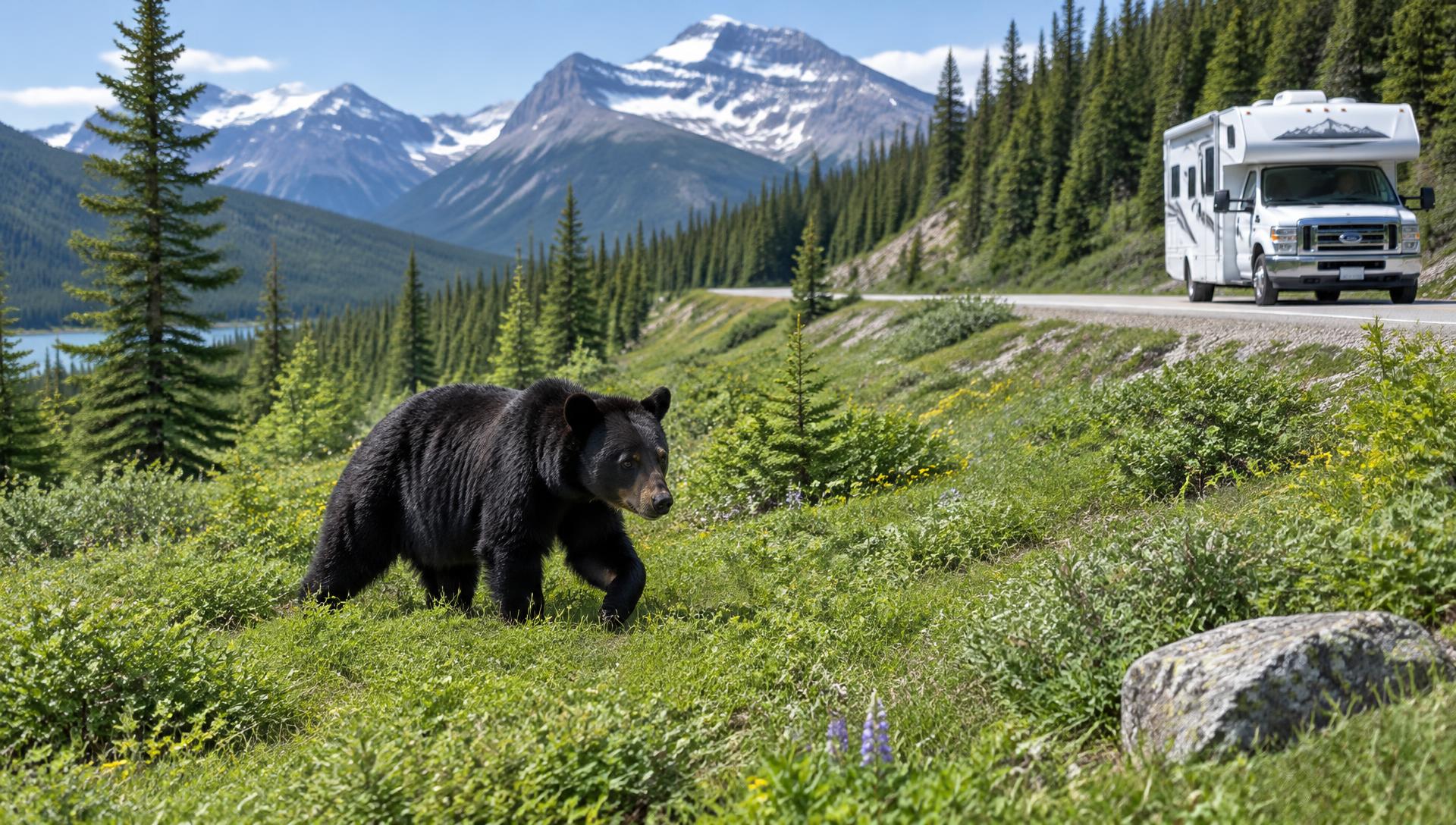
Bears 🐻
Black bears live almost everywhere in Canada. Grizzlies live in BC, Alberta, Yukon and the north.
- Carry bear spray on every hike, on your belt (not in your bag). Buy it at Canadian Tire or outdoor shops — you can't fly with it. Learn how to use it.
- Hike in groups and make noise. Bears avoid people they hear coming.
- Never leave food, coolers, BBQs, dishes or garbage outside. Many parks fine you for it. Lock it all in the RV.
- Use bear-proof bins. Never feed wildlife — "a fed bear is a dead bear".
- Encounter? Stay calm, talk in a low voice, back away slowly. Don't run. Don't climb trees.
⚠ If a bear approaches
Do not run. Gather your group, keep children close, speak calmly and get your spray ready. Back away when safe, leaving the bear an escape route. Use spray according to its label when an approaching bear is within the product's effective range. If a defensive grizzly attack makes contact, play dead on your stomach, hands protecting your neck and legs spread. If any bear stalks you, attacks inside your tent or continues a prolonged attack, fight back. Fight back against a black bear attack. Follow local park guidance: the animal's behaviour matters, not just its species.
Other wildlife dangers
| Animal | Where | Risk & what to do |
|---|---|---|
| Moose | Forested regions across much of Canada | A major collision hazard, especially around dusk and dawn. Slow down near wetlands and warning signs; Newfoundland and northern Ontario deserve particular care. |
| Elk | Banff, Jasper | Aggressive in calving (May–June) and rut (Sep–Oct). Stay 30m+ away. |
| Bison | Elk Island, Wood Buffalo, Alaska Hwy | Fast and unpredictable. Stay in your vehicle. |
| Cougars | BC, Alberta | Rare encounters. Keep kids close. Make yourself big and fight back. |
| Wolves & coyotes | Widespread | Don't leave pets or food out. |
| Rattlesnakes | Okanagan, southern Alberta & Sask | Watch your step on dry trails. |
| Ticks | Southern Ontario, Quebec, Maritimes, BC | Lyme disease risk. Check yourself after hikes. |
| Mosquitoes & black flies | Widespread; timing varies by region | Bites can spoil a trip, and some mosquitoes transmit infections such as West Nile virus. Use repellent, screens and covering clothing. |
Black bear or grizzly?
Look at shape rather than colour, and never approach for a better identification. Grizzlies usually have a prominent shoulder hump, short rounded ears and a dished facial profile. Black bears usually lack that hump and have taller ears and a straighter profile. Tracks and claw length can help trained observers, but a roadside glimpse is not a wildlife exam. Give either species plenty of room.
In mountain national parks, common minimum viewing distances are 100 metres from bears and 30 metres from elk and other large herbivores. Local rules can require more. If an animal stops feeding, watches you closely or changes direction because of you, increase the distance. A phone camera is not a reason to move closer.
Bear spray: accessible beats expensive
Buy a Canadian-labelled bear deterrent from a reputable outdoor retailer and check its expiry date. Keep it in a holster you can reach immediately, not underneath lunch in a backpack. Every adult should know how to remove the safety clip and operate their own canister. Ask about an inert practice unit if you have never used one.
Read the label for range and discharge instructions; wind can blow spray back towards you. Never spray clothing, tents or picnic tables as a preventative treatment. Store the canister securely, away from excessive heat and curious children. Bear spray is prohibited in both checked and carry-on airline baggage, so arrange local purchase and ask the retailer about safe disposal before flying home.
A tidy campsite is a safer campsite
Food storage includes much more than your dinner. Toothpaste, pet food, cooking oil, empty drink cans, dishwater and a barbecue grease tray all smell interesting to wildlife. Put attractants in approved bear-resistant storage or a locked, hard-sided vehicle when permitted by the campground. A cooler under a picnic table is not secure storage.
- Clear the table whenever you leave, even for a quick shower.
- Never keep food in a tent or a soft-sided sleeping area.
- Use designated washing and wastewater facilities; do not tip scraps into bushes.
- Follow the campground's specific rules for pop-tops, outdoor kitchens and barbecues.
Moose, elk and cougars
Moose are tall enough for their bodies to strike a vehicle's windscreen area. Their dark coats are hard to spot at night, and they may not move predictably when approached. Drive more slowly through signed wildlife corridors and avoid night driving where practical. If an animal enters the road, brake firmly while maintaining control rather than making a sudden swerve into opposing traffic.
Elk around Banff and Jasper may look remarkably relaxed beside a lawn or path. They are still wild animals. During the autumn rut, usually September into October, bulls defend access to females and can charge. Cows can be aggressive around calves in spring. Never walk between a bull and its herd, or a mother and her calf; take a different route.
Cougar encounters are uncommon. Keep children close and dogs leashed. If approached, face the animal, stand tall, gather your group and slowly create space without running or crouching. Pick up small children only if you can do so without bending towards the animal. If attacked, fight back and protect your head and neck.
Ticks, mosquitoes and wildlife jams
Ticks occur beyond the best-known Lyme disease areas, and their range is changing. Use a repellent labelled for ticks, wear long trousers in brush and check skin, clothing, children and pets after walks. Remove an attached tick promptly with fine-tipped tweezers, pulling steadily close to the skin. Seek medical advice for symptoms or questions about preventive treatment.
For mosquitoes and black flies, pack DEET or icaridin repellent appropriate for the user, loose covering layers and a head net for buggy northern evenings. Keep RV screens repaired. Bug season varies with rainfall, elevation and temperature, not just the calendar.
🍁 Top tip
A wildlife jam is not a parking invitation. Never stop in a traffic lane or block an animal's escape route. Use a legal pullout only when safe, stay inside around large wildlife, obey wardens and move on if stopping would create a crowd. No photo is worth a collision or a food-conditioned bear.